
Introduction
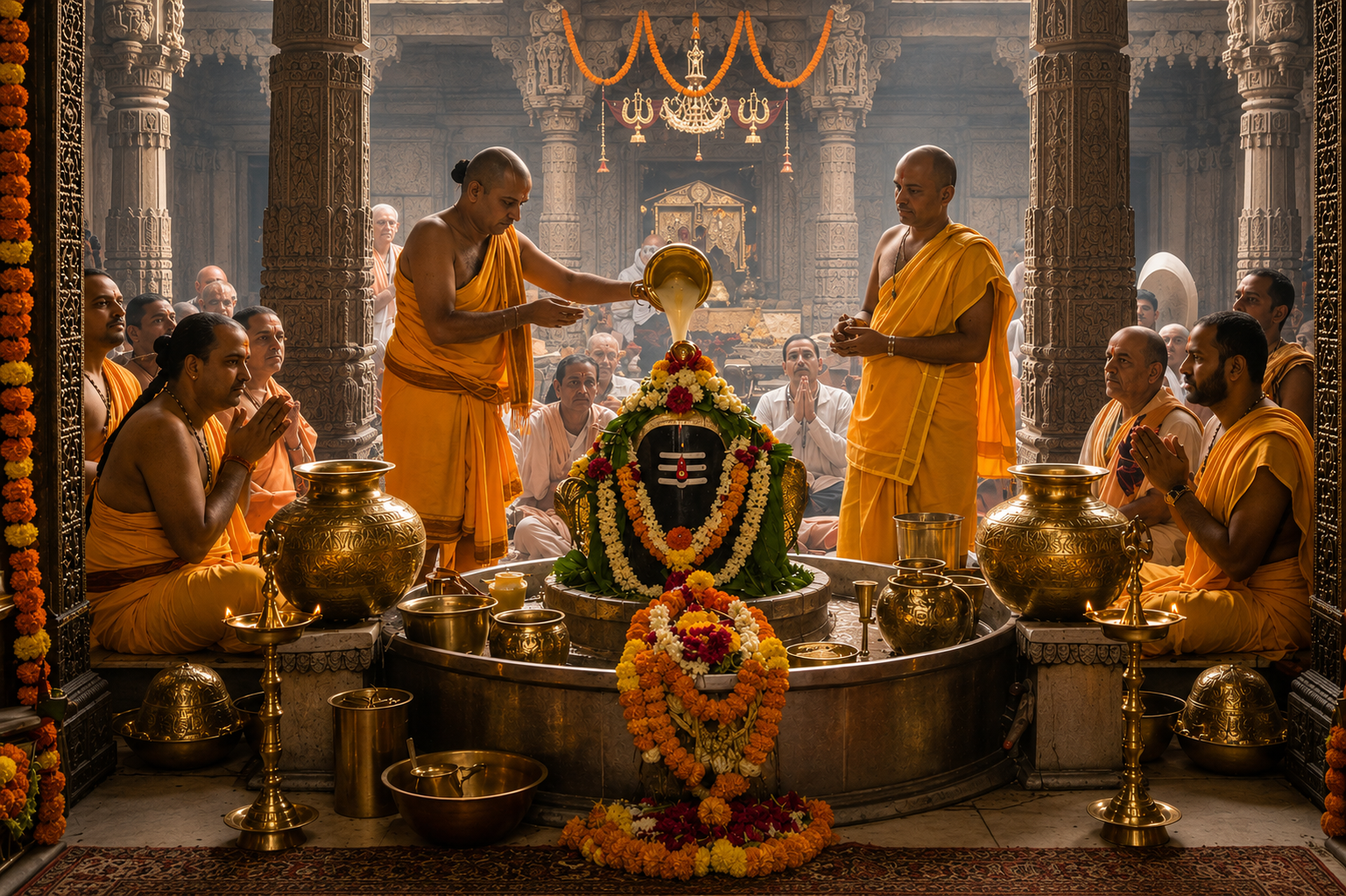
Rudrabhishek Yagya is one of the most sacred rituals dedicated to Lord Shiva. It combines the powerful chanting of Vedic mantras with the ceremonial abhishek (holy bathing) of the Shiva Lingam and the offering of sacred oblations into the holy fire (Yagya). Devotees perform this ritual to seek Lord Shiva’s blessings for health, prosperity, spiritual growth, peace, and protection from negative influences.
According to Hindu scriptures, worshipping Lord Shiva through Rudrabhishek helps purify the mind, remove obstacles, and attract positive energy into one’s life.
What is Rudrabhishek Yagya?
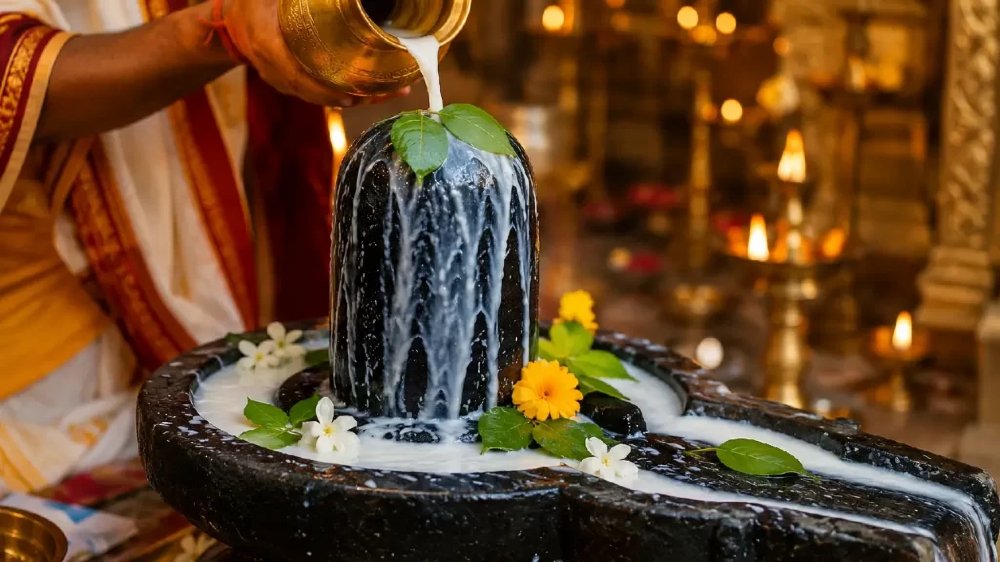
In the traditional Vedic ritual of Rudrabhishek Yagya, devotees bathe the Shiva Lingam with sacred offerings such as water, milk, curd, honey, ghee, sugar, and holy Ganga water while priests chant powerful Shiva mantras, especially from the Sri Rudram of the Yajur Veda. After the abhishek, priests perform a Yagya (Havan) by offering herbs, ghee, and other sacred materials into the fire while reciting Vedic mantras.
The ritual symbolizes devotion, purification, gratitude, and the surrender of negative energies to receive Lord Shiva’s divine grace.
Significance During Maha Shivratri
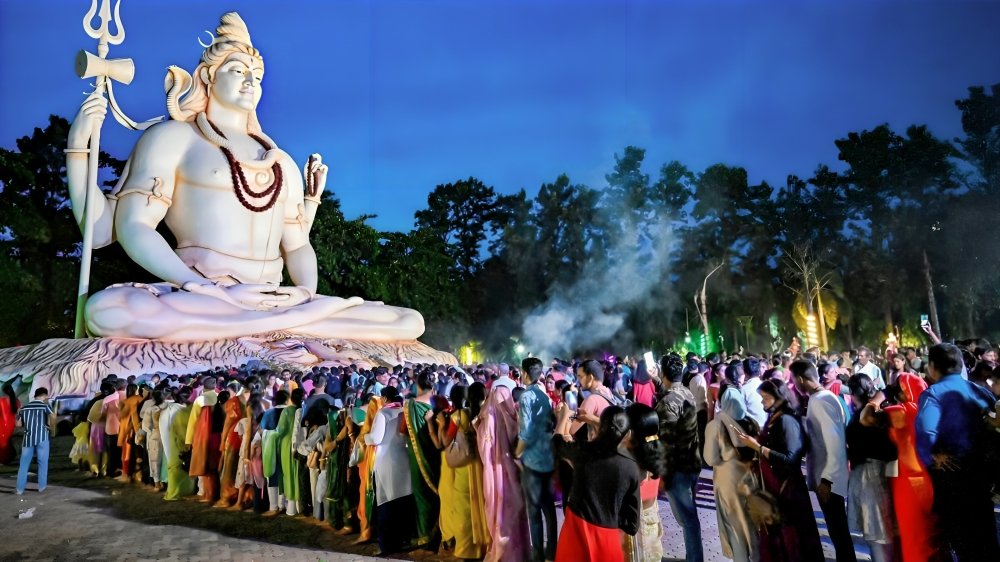
Maha Shivratri, the great night of Lord Shiva, marks the most auspicious time to perform Rudrabhishek Yagya. On this sacred night, devotees stay awake, meditate, and perform rituals to honor Lord Shiva. Devotees believe that performing Rudrabhishek on Maha Shivratri amplifies its spiritual benefits, cleanses negative energies, and attracts divine blessings for health, wealth, and inner peace.

Benefits of Rudrabhishek Yagya
Devotees believe that performing Rudrabhishek Yagya with faith offers numerous spiritual and personal benefits, including:
- Removes Negative Energies: Purifies the mind, body, and surroundings.
- Spiritual Growth: Enhances inner peace and spiritual awakening.
- Material Prosperity: Attracts wealth, success, and harmony in life.
- Health Benefits: Aids in healing from physical and mental ailments.
- Protection: Shields against negative forces and unforeseen dangers.
When Should You Perform Rudrabhishek Yagya?
Although devotees can perform Rudrabhishek throughout the year, they consider certain occasions especially auspicious.
Mondays (Somvar)
Devotees dedicate Monday to Lord Shiva, making it one of the most popular days to perform Rudrabhishek.
Shravan (Sawan) Month
The holy month of Shravan holds immense importance in Shiva worship. Consequently, temples across India witness thousands of Rudrabhishek ceremonies during this period.
Mahashivratri
Mahashivratri is regarded as the most auspicious festival for worshipping Lord Shiva through Rudrabhishek and Yagya.
Pradosh Vrat
Performing Rudrabhishek during Pradosh is believed to enhance spiritual merit and attract divine blessings.
Masik Shivratri
Monthly Shivratri is another favorable occasion for this sacred ritual.
Why Perform Rudrabhishek During Shravan and Maha Shivratri?
While Maha Shivratri holds immense importance, performing Rudrabhishek during the holy month of Shravan (Sawan) is also considered highly auspicious. Devotees believe that worshipping Lord Shiva during these times brings accelerated results, fulfilling desires and washing away sins.
Rudrabhishek Yagya Rituals and Procedure
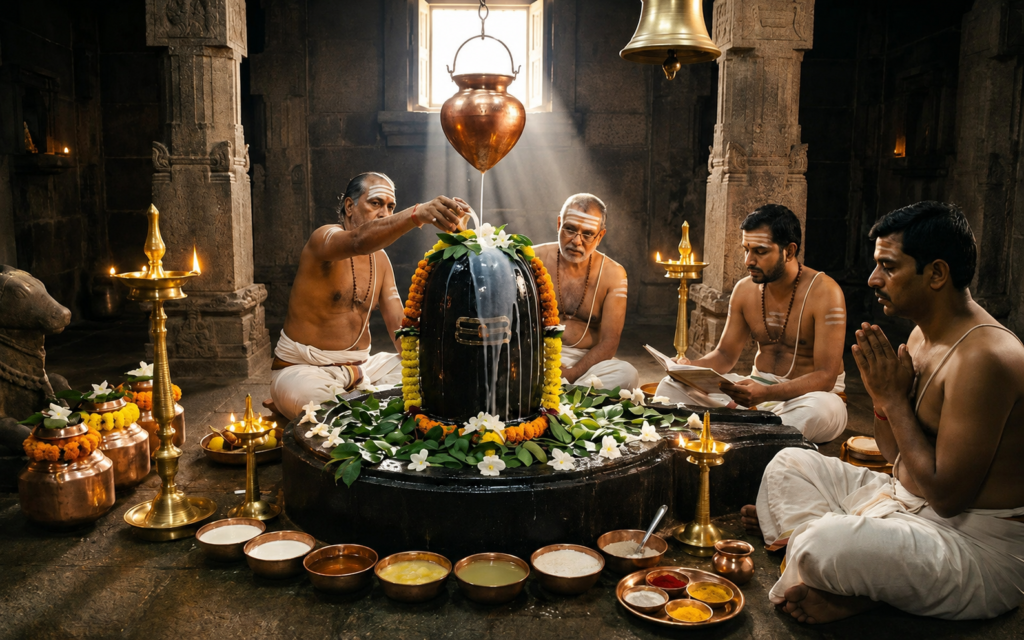
The Yagya begins with the Ganesh and Lakshmi Pooja to invoke their blessings for the successful completion of the ritual. The core of the Yagya involves bathing the Shiva Lingam with materials dear to Lord Shiva, such as:
- Water
- Coconut water
- Ghee (clarified butter)
- Cow’s milk and curd (yogurt)
- Honey and sugarcane juice
- Finely ground sugar
- Rice and sacred leaves like Bilva Patra
Throughout the ritual, priests chant Vedic mantras, especially the “Rudra Suktha,” with devotion. After the Abhishek, they adorn the Shiva Lingam with flowers and Bilva leaves and perform a grand Aarti with 108 lamps to mark the completion of the Yagya.
Important Mantras
Some of the most commonly chanted mantras during Rudrabhishek include:
- Om Namah Shivaya
- Maha Mrityunjaya Mantra
- Sri Rudram (Namakam)
- Chamakam
These sacred chants are believed to invoke Lord Shiva’s grace and create a spiritually uplifting atmosphere.
Conclusion
Devotees perform Rudrabhishek Yagya as a deeply revered Vedic ritual dedicated to Lord Shiva that symbolizes purification, devotion, and spiritual upliftment. They believe that performing this ritual with sincere faith and proper Vedic procedures brings peace, prosperity, protection, and divine blessings. Whether devotees perform it at a temple or at home, this sacred ceremony remains one of the most powerful forms of Shiva worship in Hindu tradition.
FAQs
Yes. Rudrabhishek Puja mainly focuses on the ceremonial bathing of the Shiva Lingam, whereas Rudrabhishek Yagya also includes a sacred fire ritual (Havan) performed with Vedic mantras.
Yes. Qualified priests can perform the ritual at home if suitable arrangements are made. Many organizations also offer online participation with Sankalp on behalf of devotees.
Depending on the type and number of priests, the ceremony generally takes between 2 and 5 hours.
Yes. Women can participate in the ritual according to their family’s traditions and the guidance of the officiating priest.
READ MORE: