
Introduction
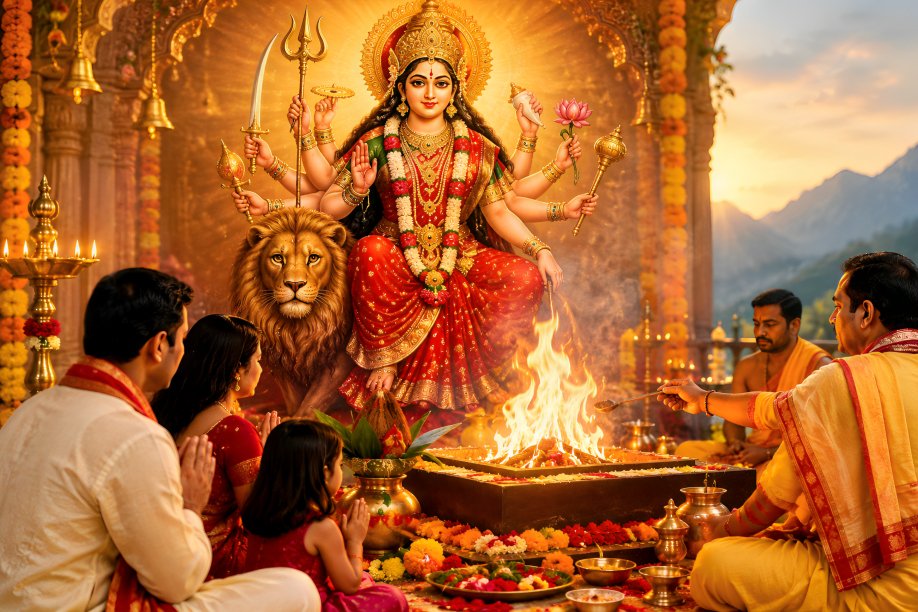
Navratri is one of the most auspicious festivals in Hindu tradition, dedicated to the worship of Goddess Durga and the divine feminine power known as Shakti. Devotees observe these sacred nine days through prayer, fasting, mantra chanting and various religious ceremonies to seek the Goddess’s grace.
Among these spiritual practices, the Maha Durga Yagya holds a special place for devotees who wish to deepen their connection with Maa Durga. According to Hindu beliefs, performing this sacred fire ritual during Navratri is an opportunity to pray for courage, peace, prosperity and protection from life’s challenges.
Let’s explore the religious significance of Maha Durga Yagya, its traditional benefits and the steps involved in performing the ceremony.
The Story Behind Navratri: Celebrating the Victory of Maa Durga
The legendary battle between Goddess Durga and the powerful demon Mahishasura, who threatened the balance of the universe, highlights the significance of Navratri.
According to Hindu mythology, Lord Brahma granted Mahishasura a boon that convinced him no god or man could defeat him. Empowered by this belief, he began challenging the divine order and creating suffering across the three worlds.
To overcome this threat, the gods united their divine powers to manifest Goddess Durga. Each deity offered her a weapon or a symbol of divine strength. Lord Shiva gave her a trident, Lord Vishnu provided the Sudarshan Chakra, and Lord Indra offered his thunderbolt.
The Goddess then entered a fierce battle with Mahishasura. After nine days and nights of combat, she defeated the demon on the tenth day, symbolizing the triumph of righteousness over evil.
This story forms an important part of Navratri’s spiritual meaning. The festival reminds devotees of the strength of divine feminine energy and the importance of courage, determination and faith in overcoming difficulties.
ALSO READ:
Five Traditional Benefits of Maha Durga Yagya
Hindus perform a Maha Durga Yagya to honor the Goddess, express their devotion, and seek her blessings in various aspects of life.
1. Prayers for Protection and Positive Energy
Devotees believe that the sacred fire, prayers and Durga mantras help create a spiritually uplifting atmosphere. Devotees perform the ritual to seek Maa Durga’s protection and overcome negative influences.
Learn more about the Maha Durga Pooja and Maha Shakti Yagya.
2. Courage to Face Life’s Challenges
Goddess Durga represents fearlessness, resilience and the power to confront adversity. Worshipping her through a traditional Yagya can serve as a reminder to approach difficult situations with confidence, patience and determination.
3. Prayers for Career Growth and Prosperity
Many devotees perform Durga-related rituals while praying for progress in their professional lives, business opportunities and financial stability. The ceremony offers a spiritual setting for expressing hopes for a more secure and prosperous future.
4. Mental Peace and Emotional Balance
Mantra recitation, prayer and participation in religious ceremonies can provide a meaningful opportunity for reflection and devotion. For many worshippers, these practices help cultivate calmness, focus and a stronger sense of inner balance.
5. Family Well-Being and Harmony
Devotees widely worship Maa Durga as a protective mother who cares for them. Families may perform the Yagya to pray for happiness, unity, well-being and harmony among their loved ones.
These benefits reflect traditional religious beliefs and devotional intentions rather than guaranteed outcomes.
Why Is Maha Durga Yagya Considered Sacred?
The sacred fire, known as Agni, plays an important role in many Hindu Yajnas. In Vedic tradition, Agni serves as a divine messenger who carries offerings to the deities during religious ceremonies.
During a Maha Durga Yagya, priests recite prescribed mantras and offer selected ritual materials into the fire. The ceremony combines prayer, disciplined recitation and symbolic offerings dedicated to the Goddess.
For devotees, these practices represent surrender, gratitude and a sincere request for divine guidance.
A Maha Durga Yagya may be considered by those who wish to pray for:
- Progress amid continuing career or business difficulties.
- Strength and clarity during stressful periods.
- Greater stability and peace within the household.
- Confidence when facing important life decisions.
- Spiritual guidance and blessings for the family.
Some devotees prefer to perform the ceremony during Chaitra Navratri because of the festival’s association with renewal, devotion and the worship of Shakti.
Maha Durga Yagya During Chaitra Navratri
Chaitra Navratri marks an important period of worship dedicated to Goddess Durga. Devotees observe the festival through prayers, fasting, recitation of sacred texts and other traditional practices.
Performing a Durga Yagya during these nine days allows worshippers to dedicate time to spiritual reflection and seek the Goddess’s blessings at an especially meaningful time in the Hindu calendar.
The choice of an auspicious date, the type of ceremony and the mantras used may depend on the devotee’s religious tradition and the guidance of a knowledgeable priest.
How Is a Maha Durga Yagya Performed?
A traditional Maha Durga Yagya involves several stages of worship. The precise procedure can vary according to the ritual tradition, the purpose of the ceremony and the guidance of the presiding Acharya.
You can also explore the Vedic Yagya tradition to understand the broader significance of these sacred ceremonies.
The principal stages commonly include the following:
1. Sankalp: Establishing the Prayer’s Intention
The ceremony begins with Sankalp, a formal declaration of the purpose of the ritual. Depending on the tradition, priests may recite the devotee’s name and other customary details during the prayer.
This step represents a clear spiritual intention and a commitment to the worship.
2. Worship of Lord Ganesha
Lord Ganesha is traditionally worshipped at the beginning of many Hindu ceremonies. Devotees seek his blessings for an auspicious beginning and the removal of obstacles.
3. Kalash Sthapana
A sacred vessel, or Kalash, is established as part of the ritual arrangements. Depending on the tradition, it may contain water and be decorated with mango leaves and a coconut. It symbolizes auspiciousness and divine presence.
4. Maa Durga Avahan
The priests invite Goddess Durga’s divine presence through prescribed prayers, invocations and mantras. This stage focuses the ceremony on the worship of the Goddess and her manifestations of Shakti.
5. Offerings into the Sacred Fire
Ghee, grains and other appropriate ritual materials are offered into the consecrated fire while the priests recite the designated mantras. These offerings represent devotion, reverence and the act of surrendering one’s prayers to the divine.
6. Recitation of Durga Mantras and Sacred Texts
Depending on the ceremony, priests may chant the Durga Beej Mantra and selected passages from the Durga Saptashati. The recitation forms a central part of the worship and reflects devotion to Maa Durga.
7. Purnahuti: The Concluding Offering
Purnahuti marks the final offering of the Yagya. It signifies the completion of the principal fire ritual and the presentation of the devotee’s prayers.
8. Prasad and Final Prayers
The ceremony concludes with prayers, blessings and the distribution of Prasad according to the ritual tradition. Devotees receive it as a symbol of gratitude and divine grace.
Why Consider YagyasDevam for a Maha Durga Yagya?
Choosing a provider for a religious ceremony involves understanding its procedures, the priests conducting it and the services included.
YagyasDevam offers information about its Vedic ritual services and the arrangements available for devotees seeking a Maha Durga Yagya.
Here are some points prospective devotees may wish to consider:
Traditional Ritual Practices: Understand the mantras, offerings and ceremonial procedures included in the selected Yagya.
Guidance from Experienced Priests: Ask about the qualifications and experience of the priests and the Acharya overseeing the ceremony.
Remote Participation: If you cannot attend in person, check whether arrangements are available for performing the ceremony on your behalf and how participation or Prasad delivery is handled.
Personalized Sankalp: Confirm which details are required for the Sankalp and how the devotee’s prayer intentions are incorporated into the ritual.
Clear Service Information: Before booking, review the ceremony’s duration, included offerings, fees and other relevant arrangements.
For further details, visit the Maha Durga Pooja or Maha Shakti Yagya service page.
Conclusion
Navratri offers devotees a meaningful opportunity to honour Goddess Durga and reflect on the qualities she represents: courage, wisdom, compassion and strength.
A Maha Durga Yagya brings together sacred fire offerings, traditional mantras and focused prayer in a ceremony dedicated to the divine feminine. Many devotees undertake this ritual to seek blessings for protection, family well-being, professional progress and inner peace.
If you are planning to perform a Yagya during Chaitra Navratri, consider consulting an experienced priest to understand the appropriate procedure and auspicious timing according to your tradition.
Explore the Maha Durga Yagya service and learn how this traditional ceremony can become part of your Navratri worship.
May Maa Durga inspire you with strength, guide you through life’s challenges and bless your home with peace, harmony and happiness.
FAQs
Maha Durga Yagya is a traditional Hindu fire ritual performed to worship Goddess Durga and seek her blessings for protection, peace, strength, and prosperity.
Devotees perform Maha Durga Yagya during Navratri to pray for spiritual protection, inner strength, family harmony, success, and positive energy.
Chaitra Navratri is dedicated to Goddess Durga and her divine Shakti. Many devotees consider this period especially suitable for prayers, mantra chanting, and sacred rituals dedicated to the Goddess.