
Introduction
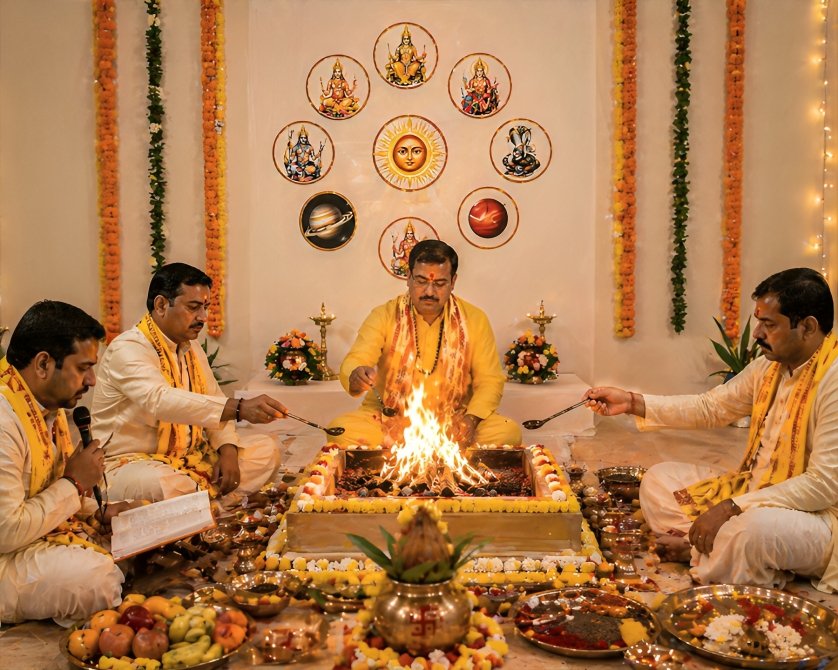
In Vedic astrology, the Navagrahas, or the nine planetary deities, are believed to influence different aspects of human life. From health and career to relationships, finances, and spiritual growth, each planet represents a unique cosmic force that shapes our experiences according to our karma. Through practices like Navagraha Yagya, devotees seek spiritual support to balance these planetary influences and navigate challenging periods with faith and self-awareness. While these influences are an important part of Jyotish (Vedic astrology), they are not seen as fixed or unchangeable, and Vedic traditions describe several remedies that help individuals during difficult planetary phases.
One such remedy is the Navagraha Yagya, a sacred Vedic fire ritual performed to seek the blessings of all nine planetary deities—Surya (Sun), Chandra (Moon), Mangal (Mars), Budh (Mercury), Guru (Jupiter), Shukra (Venus), Shani (Saturn), Rahu, and Ketu. Many devotees perform this yagya when an astrologer identifies challenging planetary combinations in their birth chart or during difficult planetary transits. The ceremony is believed to help reduce negative influences while inviting balance, positivity, and spiritual strength.
What is Navagraha Yagya?
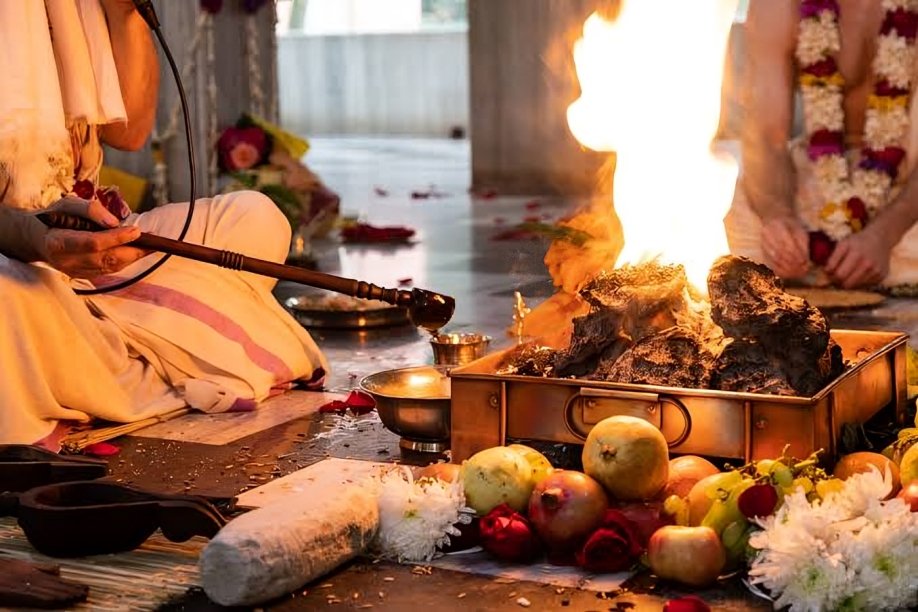
Navagraha Yagya is a traditional Vedic fire ritual dedicated to the nine planetary deities collectively known as the Navagrahas. During the ceremony, trained Vedic priests chant specific mantras and offer sacred materials such as ghee, herbs, grains, flowers, and other ritual items into the holy fire. Each offering is made with prayers seeking harmony between the individual and the cosmic energies represented by the planets.
The ritual is not intended to “change destiny” overnight. Instead, many Vedic traditions regard it as a spiritual practice that helps devotees cultivate positive energy, strengthen beneficial planetary influences, and seek divine grace during challenging phases of life. The exact method and mantras may vary slightly across different Vedic lineages and regional traditions, but the purpose remains the same—to restore balance and invite auspiciousness.
Who Are the Navagrahas?
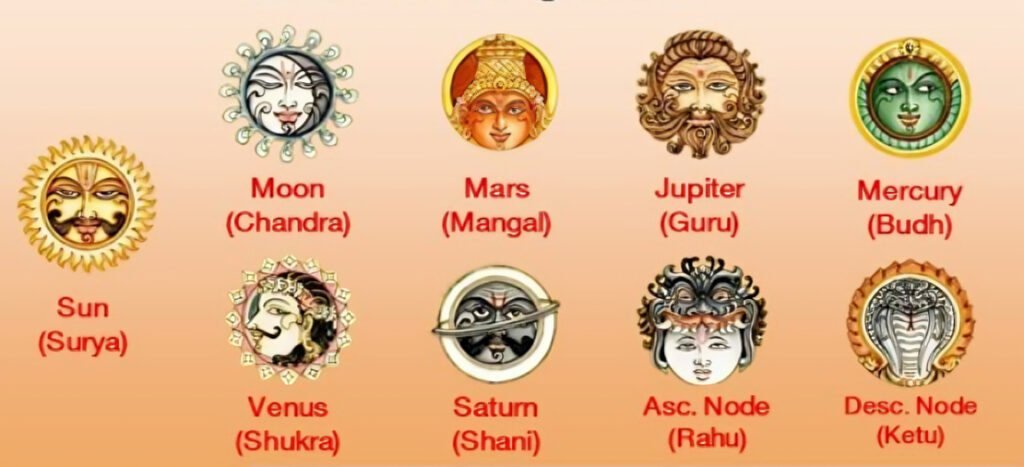
The Navagrahas represent nine celestial influences that play an important role in Vedic astrology. Each planet governs specific areas of life and is associated with distinct qualities.
Surya (Sun)
The Sun symbolizes vitality, leadership, confidence, authority, and self-esteem. A strong Sun is often associated with success, recognition, and good health, while an afflicted Sun may indicate challenges related to confidence or professional life.
Chandra (Moon)
The Moon governs emotions, the mind, intuition, and emotional well-being. It also represents one’s relationship with family, especially the mother. Worshipping Chandra is believed to promote mental peace and emotional stability.
Mangal (Mars)
Mars represents courage, energy, determination, property, and physical strength. In Vedic astrology, it is also connected with discipline and the ability to overcome obstacles. Mangal-related remedies are commonly recommended for certain marital and property-related concerns.
Budh (Mercury)
Mercury rules intelligence, communication, education, analytical thinking, and business skills. A balanced Mercury is believed to support learning, decision-making, and effective communication.
Guru (Jupiter)
Jupiter is regarded as the planet of wisdom, knowledge, prosperity, spirituality, teachers, and divine guidance. It is often associated with higher learning, marriage, children, and overall good fortune.
Shukra (Venus)
Venus governs love, relationships, beauty, creativity, luxury, comfort, and artistic expression. A favorable Venus is traditionally linked with harmonious relationships and material comforts.
Shani (Saturn)
Saturn represents discipline, responsibility, patience, justice, and the law of karma. Although many people fear Saturn, Vedic scriptures often describe Shani as a teacher who rewards sincere effort, honesty, and perseverance.
Rahu
Rahu is known for ambition, innovation, worldly desires, foreign connections, and sudden developments. Depending on its placement, Rahu may create opportunities as well as confusion, making proper guidance especially valuable.
Ketu
Ketu represents spirituality, inner wisdom, detachment, intuition, and liberation. While it may encourage people to look beyond material pursuits, it is also associated with spiritual awakening and self-discovery.
Why is Navagraha Yagya Performed?
Every person’s birth chart is unique, and the effects of the planets differ according to their placement, strength, and ongoing planetary periods known as Dashas and transits. During certain phases, some planetary combinations may create challenges that affect different areas of life.
For example, someone may experience repeated delays in career growth despite sincere efforts, while another person may face relationship misunderstandings, financial instability, or unexpected obstacles. In such situations, Vedic astrologers may recommend a Navagraha Yagya as one of several spiritual remedies. Along with personal effort and righteous living, the ritual is believed to help devotees seek divine blessings and navigate difficult periods with greater confidence.
Benefits of Navagraha Yagya
Devotees perform Navagraha Yagya with the belief that it can bring greater harmony between their lives and the planetary influences described in Vedic astrology. While experiences differ from person to person, many people perform this sacred ritual to seek blessings for:
- Reducing negative planetary influences
- Removing obstacles in personal and professional life
- Improving career opportunities and business growth
- Supporting financial stability and prosperity
- Promoting physical health and emotional well-being
- Strengthening family harmony and relationships
- Encouraging peace of mind and positive thinking
- Supporting education and intellectual growth
- Enhancing spiritual awareness
- Seeking protection during difficult planetary periods
Like many Vedic rituals, the benefits are traditionally understood as depending on sincere faith, proper performance of the ceremony, and an individual’s karma.
Who Should Perform Navagraha Yagya?
Navagraha Yagya may be recommended for individuals who are experiencing prolonged difficulties that Vedic astrology associates with planetary influences. It is commonly performed by devotees seeking spiritual support during significant life transitions or challenging astrological periods.
An astrologer may suggest this yagya if a birth chart indicates:
- Weak or afflicted planetary positions
- Challenging Mahadasha or Antardasha periods
- Sade Sati or Dhaiya related to Saturn
- Rahu or Ketu-related challenges
- Delays in marriage
- Business or career obstacles
- Financial instability
- Repeated health concerns
- Family disputes
- Lack of mental peace
Since every horoscope is different, personalized guidance from a qualified Vedic astrologer is generally recommended before performing the ritual.
How is Navagraha Yagya Performed?
Although the exact sequence may vary between Vedic traditions, a traditional Navagraha Yagya generally includes the following steps:
- Sankalpa – The devotee makes a sacred resolution stating the purpose of the ritual.
- Ganesh Puja – Lord Ganesha is worshipped to remove obstacles before beginning the ceremony.
- Kalash Sthapana – A sacred vessel is established as part of the ritual preparations.
- Invocation of the Navagrahas – The nine planetary deities are respectfully invoked.
- Mantra Chanting – Priests recite the prescribed Navagraha mantras.
- Havan (Fire Ritual) – Sacred offerings such as herbs, grains, sesame seeds, flowers, and ghee are offered into the fire.
- Purnahuti – The final offering marks the completion of the yagya.
- Aarti and Prasad – Devotees receive blessings and sacred offerings after the ceremony.
The ritual is traditionally performed by experienced Vedic priests who are trained in the correct pronunciation of mantras and ritual procedures.
When is the Best Time to Perform Navagraha Yagya?
There is no single date that is considered universally ideal for everyone. In many traditions, the most suitable time is determined after examining the individual’s horoscope and identifying significant planetary periods.
Navagraha Yagya is often performed:
- During challenging Mahadasha or Antardasha periods
- During important planetary transits
- Before starting a new business
- Before marriage
- During major life changes
- On birthdays or significant family occasions
- On astrologically auspicious Muhurats
The timing depends on personal circumstances rather than a fixed calendar date.
Why Choose Professional Navagraha Yagya Services?
A Navagraha Yagya involves detailed Vedic procedures, precise mantra recitation, and specific ritual offerings. For this reason, many devotees prefer experienced Vedic priests who are well-versed in traditional practices.
Professional yagya services often provide horoscope consultation, proper ritual arrangements, opportunities to participate online through live streaming, and the delivery of blessed prasad after the ceremony. These services make it easier for devotees around the world to participate while ensuring that the ritual follows established Vedic traditions.
Conclusion
Navagraha Yagya is a revered Vedic fire ritual that honors the nine planetary deities and seeks harmony between human life and the cosmic forces described in Vedic astrology. Whether someone performs it for spiritual growth, peace of mind, or relief during challenging planetary periods, the ceremony reflects a long-standing tradition of seeking divine grace through prayer, mantra, and sacred fire.
While different Vedic traditions may vary in their ritual details and interpretations, the central purpose remains consistent—to pray for balance, remove obstacles, and cultivate a life guided by wisdom, positivity, and devotion. When performed with faith, proper guidance, and sincere intention, Navagraha Yagya continues to be a meaningful spiritual practice for countless devotees.
FAQs
The duration depends on the scale of the ceremony and the number of priests involved. In most cases, it lasts between two and six hours.
Yes. Many temples and Vedic organizations now offer online participation through live streaming, allowing devotees to join the ceremony from anywhere while the priests perform the ritual at the temple.
Many Vedic traditions consider the yagya suitable for anyone seeking divine blessings, peace, and harmony. However, the decision to perform it is often based on individual circumstances and astrological guidance.
Vedic scriptures generally present yagyas as spiritual remedies rather than instant solutions. They are believed to complement sincere effort, ethical living, prayer, and devotion rather than replace them.
READ MORE: